Search This Blog

Sunday, August 28, 2022

Many hands make short work..or something like that


The noise woke me at around 3am, two nights in a row. It sounded like someone was rolling a large garbage bin down a driveway – except we were at the cottage and we didn’t have a garbage bin. Or a driveway. On the third night I sat straight up in bed, straining to make sense of the weird noise. I have heard squirrels doing construction on a maternity ward in my attic (sounds like tiny hammers and saws), as well as woodpeckers, foxes, loons and raccoons, chattering at each other pre-dawn. This was a new sound though. I talked it over with the Farmer at breakfast.

I struggled to describe the noise I had heard.

“I heard it too! Thought it was thunder at first. Are the raccoons in the recycling again?”

Our Golden Retriever Fergus had also heard the noise. He was up before dawn, pacing, growling and ready to bolt as soon as someone opened the door. Once outside, nose to the ground, he circled the house three times before he gave up, distracted by an enticingly chewable stick.

“No idea. The recycling was untouched. The porch fridge had little muddy handprints on it – a sign that the raccoons had been trying to get into it – but no other evidence of tampering.

Since our new neighbour began removing trees from his property in order to renovate his cottage, we had all kinds of new wildlife visiting our place. Fergus had an unfortunate meeting with a baby porcupine that resulted in a trip to the vet to get six quills removed from his muzzle. When we set live traps to catch the porcupine family (which is a near impossible feat), we caught a mama and teenaged raccoon instead. They are strong enough to bend metal, so we didn’t leave them in there long. I threw a blanket over the cages to stop the coons from snarling and the Farmer sprung the doors with a long pole. Raccoons can be vicious when cornered.

We didn’t relocate the racoons because there were three babies sniffing around the cages and scurrying up the nearest tree. So now we are host to the whole family. They were sitting in the middle of the road the other night when we came home from dinner, playing tug of war with an earthworm. I hope they don’t get hit by a car. People don’t often realize the lasting effects of cutting down an entire acre of mature trees in one go. It doesn’t give the animals long enough to reorient themselves. They wander around dazed and confused for a bit until they find another suitable home.

I thought about this as I approached my compost bin with a load of corn husks. The sliding door on the top of the bin had been pulled open and bent in half. Muddy handprints covered the side of the barrel where tiny hands had worked hard to roll and spring it open. I’m going to have good soil this fall thanks to those raccoons who keep stirring up my compost.


The Farmer is an eternal optimist


Farmers hope for the best and prepare for the worst. They are the ultimate optimists. They prepare the soil, plant the seeds and hope the crop will grow, even if it was washed out by floods or shrivelled by drought the year before. And so, the Farmer is buying more chicks, even though our little flock was wiped out last year by some kind of stealthy predator. 

We will do what we can to keep the raccoons out of the chicken coop this year. We will cover the space with chicken wire and install a door that even the most dexterous fingers will not be able to open. We will keep a light on and the radio will play all night. But even then, we might lose a few birds to the coons. Because if they want to get in, they will. 

Of course, theoretically, we can trap and get rid of the raccoons, but they are smarter than most of the traps. So, in the end it is up to luck. We just hope that the raccoons have found something else to eat this year, so they will leave our chickens alone. At least for the 12 weeks that we need to grow them. 

I am not a huge fan of chickens, because they peck my ankles. Every time I go in to feed them, they swarm around my feet and peck me – and we never let their feeders run empty. It isn’t as if they are starving or even hungry. They are just socially awkward. They have no idea how to make friends with the hands that feed them. 

Chickens are also cannibalistic. If one of their lot gets wounded, you have to pick him out and put him in his own quarantined space, or his friends might eat him. How is that for nature at its most brutal? Disgusting. I prefer turkeys. They are polite, softly cooing around you as you fill their feeders. They also respond in unison sing-song gobbles when you speak to them. Turkeys are cool. 

Last year after our flock was destroyed, we were left with a handful of chickens and one lone turkey. After the chickens went to market, Turkey Lurkey was alone. We gave him to our daughter who raises laying hens and she snuck him into her coop under cover of darkness. When the sun came up the next morning he was pretty much accepted into the fold. We ate him for Easter. 

Growing your own food is risky business, but it’s worth it (I say as I watch my husband roll out the chicken wire, from my safe vantage point on the porch).


Thursday, June 2, 2022

Not my Donkey, not my circus


For those people who messaged me, worried that my donkey may have been on the loose over the weekend, thank you but it was not my beast of burden. Our donkey was shipped out years ago when we found a new home for our sheep.

Of course, I’m not sure what farm he calls home at the moment. If he is still in the area, it could very well be the same donkey who used to earn his keep watching over the sheep at our farm. He sure did enjoy a springtime escape and walkabout.

One foggy morning a few years ago, I was headed down the road to work when the pre-dawn mist cleared in front of me to reveal two big butts. The little grey one belonged to Donkey and the big gold one belonged to our Belgian horse, Misty.

I slammed on the brakes and climbed out of the car to give chase. I tried running circles around them like a sheepdog and then I remembered that Donkey would do just about anything for an apple. I went back to the kitchen and grabbed a few. Within about ten minutes I had the two of them back in the barnyard, safely secured. I even made it to work on time.

I think Donkey could get out of just about any gate if he really put his mind to it. He would spend hours nibbling at locks and chains with his dexterous lips, using them like fingers. Sometimes he got out and visited the horses down the road. Many times I would glance up and find him calmly nibbling the flowers in my garden.

Occasionally Donkey used his powers for good. One night at dusk he broke through the yard gate and came to the kitchen window. It was getting dark, but I saw the whites of his eyes. I don’t know what his next plan would have been if I hadn’t seen him.

When we went outside, Donkey headed off down the field at a clip. That’s when we noticed the sheep weren’t in the barnyard. We jumped on the ATV and followed Donkey, who led us to the sheep in the back pasture. They had climbed through a hole in the fence but when dark fell, they couldn’t find their way back out. As we opened the gate and Donkey led them back up to the barn, we could hear the eerie choir of coyotes singing behind us.

That rescue gained Donkey a few points, but the next day he erased them by wandering over to the neighbour’s house and peering in her patio door as she sipped her coffee.


We had a sheepdog and a dogsheep


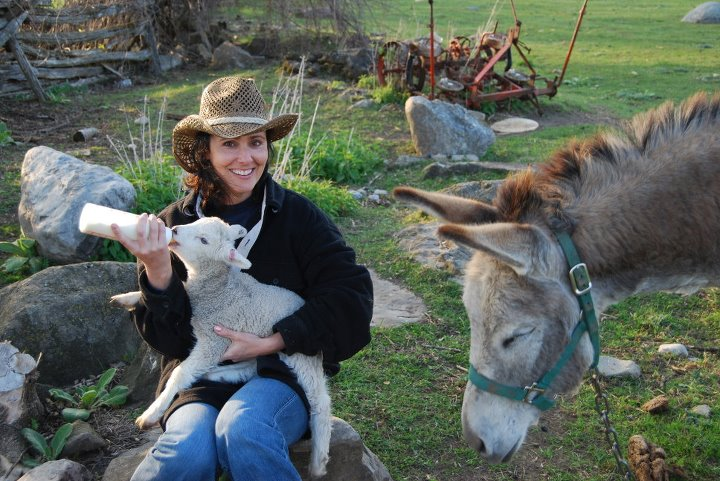
There once was a sheep who thought she was a dog. When Gracie was born, her mother either died or rejected her – I can’t remember which – sad stories are best forgotten on the farm. Luckily, she took to the bottle right away. She also learned to steal from other ewes when they had their heads in the feeder and weren’t paying full attention to who was under their udder. She wasn’t a dumb sheep, by any means. But she did have a very vacant look on her face. It was like a perma-smile. She never looked alarmed or sad – just happy. All the time.

While most lambs totally forgot about me as soon as they were turned out of the barn onto the fresh new meadow, Gracie had total recall. All I had to do was shake a pail of sweet feed or call her name and she would come running, bleating her excitement. I think she eventually got used to the sound of my rubber boots crunching across the gravel. You didn’t have to call for very long. Gracie was never very far away and she would let complete strangers pet her.

Gracie was also a bit of a show stealer. She loved the spotlight. I gave a presentation at the Literary Follies one year and my daughter held Gracie in the wings off stage. When I pulled a baby bottle out of my bag and clicked my tongue Gracie was released and came bouncing across the stage to be held and fed in my lap.

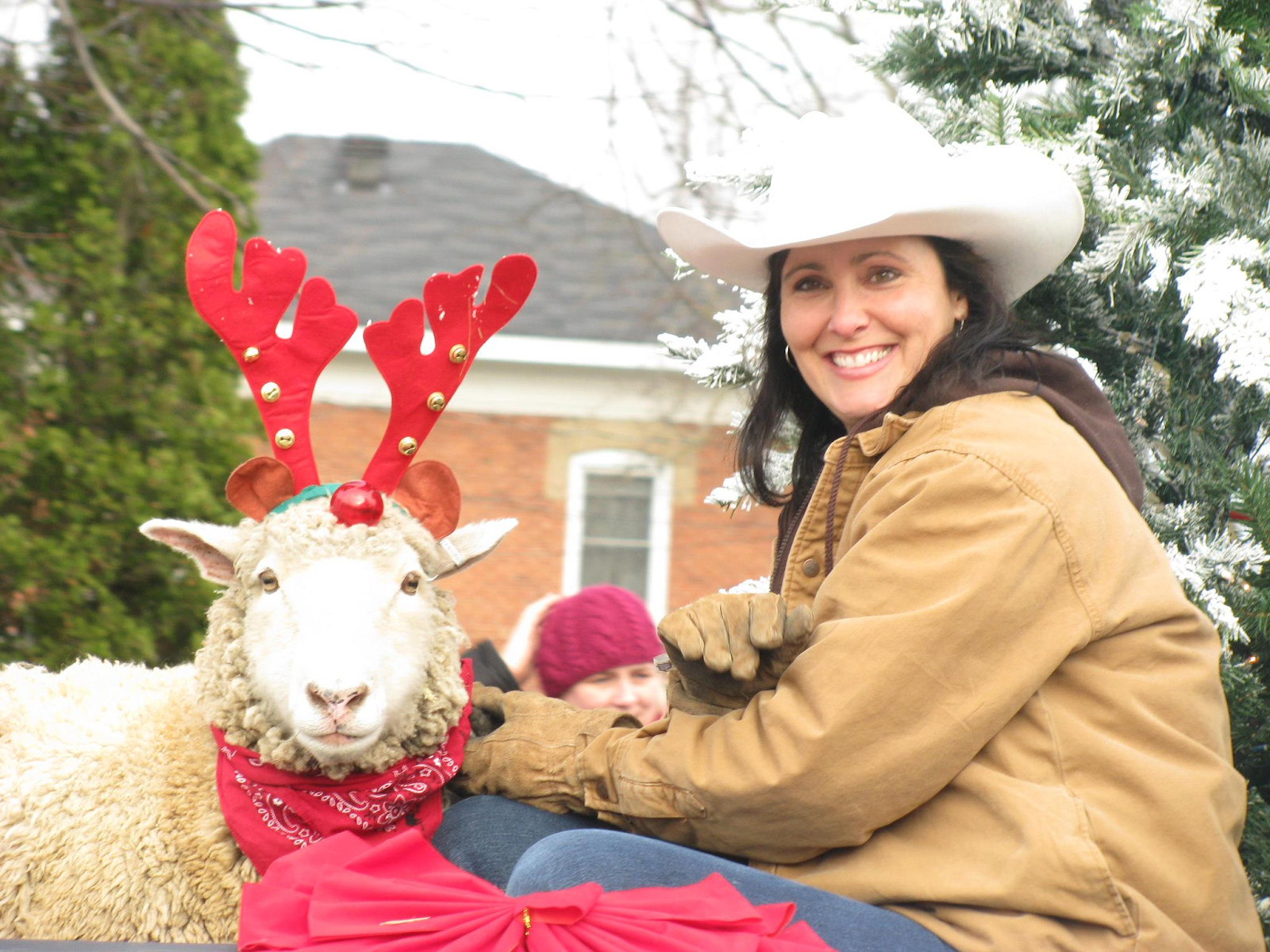
Years later, Gracie was part of the local Christmas Parade. She seemed to be smiling at everyone from atop the float. If she could wave, she would. Her little stub tail was wagging, like the dog she thought she was.

When we decided to get out of sheep farming, I just couldn’t say goodbye to Gracie. I kept her for a bit longer. The donkey and horse let her join them on their daily walks, and the three of them looked like the Bremen Town Musicians. At night, though, they stood while Gracie lay on the cold ground. She didn’t have her comrades to keep her warm any longer. I decided it was time to let her go to a nearby farm where they also had sheep. Donkey went with her, to guard the flock.

I heard that Gracie eventually found her calling, entertaining residents at a seniors’ home in the area. What a great idea, to have a bit of a hobby farm on site where many former farmers could visit or even help to take care of the animals. I’m sure Gracie basked in the attention.


Friday, March 11, 2022

Springtime on the farm is good for the soul


My first lambing season on the farm was January of 2008. That was the same month that my father died, after a brief but intense bout of pancreatic cancer. The numbness that tends to plague many of us in the winter months was intensified for me because of this loss. I was also fairly overwhelmed with the emotional involvement of lambing – the adrenalin, the worry, and the sadness when a newborn doesn’t make it; the utter delight when you see one thriving and bounding around the pen like a springbok.

I barely remember that winter. It’s all a blur.

Springtime, however, was another story. After eight weeks, it was time to let the first lambs out onto the new green shoots of grass that were poking through the last few puddles of snow. We opened the doors to the pens, and the first of the brood poked their heads out into the aisle. Seeing an escape route, the rowdier ones pushed them on from behind. Soon everyone was at the door to the barn, waiting for me to open it. They poked their noses at the cracks in the door, the sunlight peeking through.

As I slid the door open, bright sunshine beamed in and blinded the lambs who were used to the filtered rays of the pen. They shook their tiny, bobbed tails and blinked. Then, one tentative hoof on the concrete ramp. Oh! It makes a tapping noise. Tap, tap, tap. She did a little dance and spun around. Her cousin followed. A tiny mosh pit of lambs was created on the ramp before the first ewe stepped out, stretched her neck up to the sun and gave them a good shove out of her way.

Once on the grass, the lambs seemed energized with a sudden high voltage. They sniffed, bleated, jumped and ran. Some, realizing they had lost their mothers on the outside of the pen, began to run around in circles, butting udders with their heads, in a desperate search for something familiar. They were repeatedly nudged away until, finally, they found the ewe that belonged to them.

The ones that had been on the bottle sometimes needed a top-up at the end of the day, when we brought them back inside. For the most part, though, they forgot all about me. Life was suddenly so much bigger than the soft hay in the lambing pen and the warm sweetness of milk.

Watching those lambs celebrating life helped me to remember that our difficult seasons come and go. Life is a cycle, and death is just one tiny part of it.

-30-


Wednesday, March 9, 2022

No arachnophobes in this house


When I travelled to Australia, I made the mistake of reading the Lonely Planet’s guide to the most poisonous animals on the continent. For the first week I had trouble venturing outside as a result – until someone told me that you are just as likely to find a funnel web spider or carpet snake inside as out. That information came in handy when I found out that the thumping in the wall behind my bed was actually a harmless carpet snake climbing up to the loft, where she would slither inside, coil herself around the rafter and spend the night.

It was also helpful to learn that the larger huntsman spiders tend to be harmless. There certainly were enough of them, in the garage and under the sun visor of our SUV, ready to pop out and surprise us at any moment (once our startled driver almost went off the road). I also met the shower spider when I was in Brisbane. When the power went out, I showered the sea salt off myself in virtual darkness. At first, I thought the fuzzy thing that had fallen onto my foot was a facecloth. Until it moved.

When I’m frightened, I go completely silent. I got out of the shower and without drying off, wrapped a towel around myself and opened the door to the kitchen. My host and his uncle were sitting there on the couch, drinking beer. “Did you meet Harry, then?” they asked.

That introduction to the wild world of arachnids was good practice for me, when I became a cottage owner. Otherwise, I might have been a bit put off when I realized a family of wolf spiders (cousins to the huntsman) had taken up residence in the closet. They introduced themselves one day when I was sitting at my desk, by skittering across my laptop keyboard. They made me jump, then they jumped themselves. They are actually kind of cute and they do eat other bugs (like the dreaded mosquito) – but I swept them outside anyway.

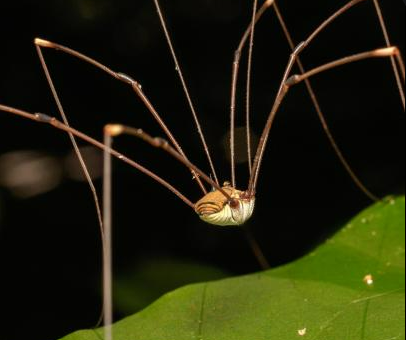
The other day I realized that there is a daddy longlegs on the ceiling above our shower. It seems to be catching ladybugs, so I let it remain. The ladybugs are terrible pests – I vacuum or wipe them off the window every day, but they still find their way into my bed – and my water bottle – most nights.

Then the Farmer pointed out that the daddy long legs has a wife. And she appears to be nesting. I don’t mind sharing my bathroom with one bug-eating spider, but I’m not sure I want a whole clutter in there, watching me shower.


Even the robin's flight south was cancelled


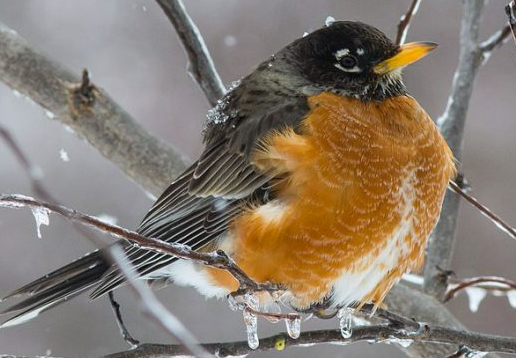
I was walking Fergus down the road the other day when he stopped and stared up at a tree. I followed his line of sight up to one of the fattest robins I have ever seen. Even the dog seemed to think it strange to see a robin here in January. Worms are frozen this time of year, yes? I look forward to seeing the first robin every spring, as a harbinger of warm weather and the end to winter. Don’t tell me we have totally messed up bird nature with climate change too.

I’ve seen other people in Eastern Ontario posting photos of robin sightings online. Apparently there are quite a few of them that decided to stay for the winter. Someone even caught a picture of a robin fishing in the open river for a minnow. I did some research and this is what I found out.

Robins are nomadic, so while they may have left your property, they may not have flown south. In the colder month their diet has to change, so they will relocate to a place where they can find berries or fallen apples. And they aren’t actually fat – the bird I saw was likely doing something called “rousing” – a fluffing of the feathers for optimal warmth. Robins have more than one layer of feathers, so they can trap warm air next to the body, to stay dry and warm in winter.

According to most online sources, there isn’t much you can do to help robins in winter. If food becomes scarce, they will simply move on. They won’t eat from your birdfeeder because they have learned that food is found in shrubs or on the ground. You might try leaving out some suet, berries, raisins or chopped apples. But they are pretty good at fending for themselves.

Someone else suggested a warm bird bath might be helpful, because the robin spends most of its energy in winter shivering to stay warm. If it had warm water to drink, this might help.

I don’t know who to believe with this conflicting information, so I’ve got all bases covered. I’ve put out some suet and berries, and my warm water bird bath should be here next week. I just hope it doesn’t attract every member of the winter animal kingdom. I don’t want to look out the kitchen window and see a coyote out there enjoying the spa.

The main cohort of robins is expected to return right on schedule in spring when the ground melts and worms can be found again. That’s one mystery solved. Now what about that huge murder of crows?